

Bad weather can affect your television reception, causing pixelated pictures, missing channels, frozen screens or a sudden “No Signal” message. In Greater Shepparton, Victoria, homeowners may notice reception problems during storms, strong winds or changing weather conditions. While some disruptions are temporary, recurring problems can indicate a damaged antenna, loose cable or poorly aligned equipment. Understanding what affects your signal can help you identify the problem and decide when to seek professional assistance. Jason’s TV, based in Congupna, provides digital TV antenna installation, repairs and TV setup services throughout the surrounding region.
How Does Weather Affect Your TV Signal?
Digital television relies on a suitable antenna, correctly installed cabling and a signal that reaches your home reliably. Weather can affect these components directly or influence how radio signals travel through the atmosphere.
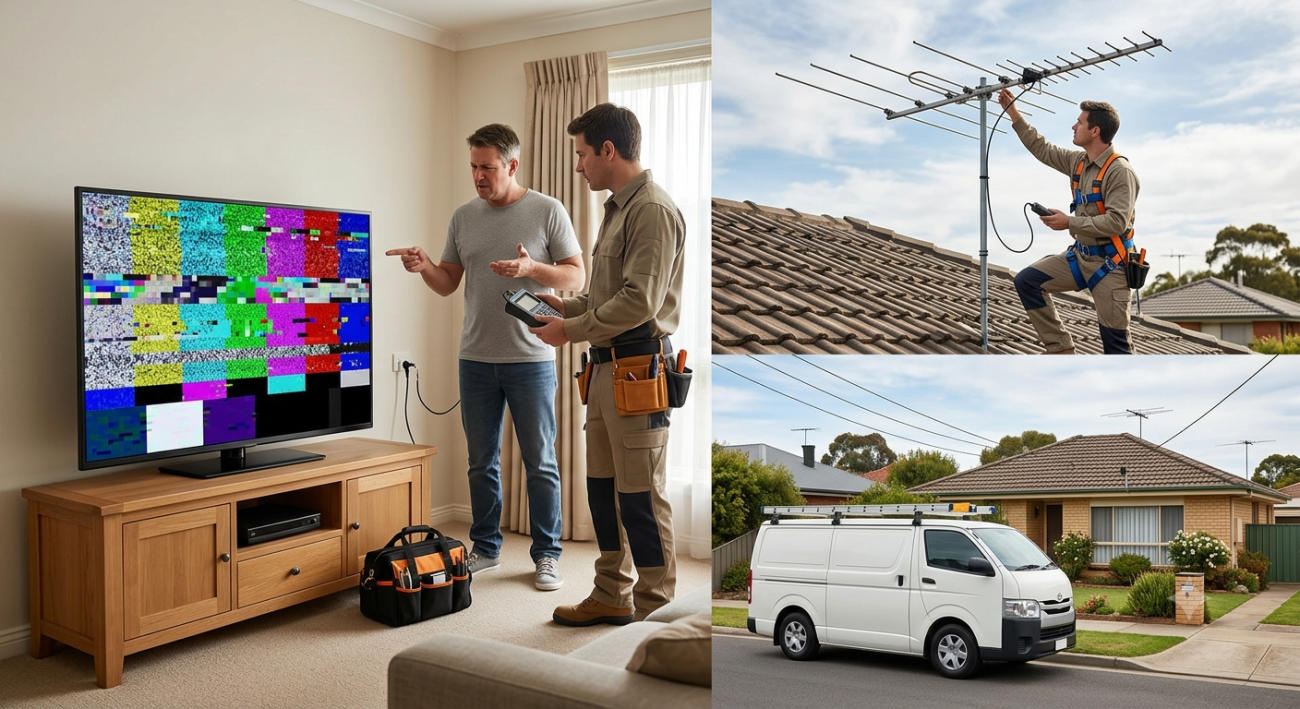
Common symptoms include:
- TV pictures breaking up into small squares.
- Channels disappearing during storms.
- Frozen pictures or interrupted sound.
- A television displaying “No Signal”.
- Reception becoming unreliable at certain times of day.
According to the Australian Communications and Media Authority (ACMA), reception issues can result from antenna problems, interference, geographical conditions and faulty cabling. Weather is one possible cause, but it is not always the explanation.
1. Heavy Rain and Moisture Can Affect Reception
Heavy rain can sometimes disrupt television reception, particularly when an existing signal is weak. Moisture can also expose problems with outdoor cables, connectors and antenna components.
Water entering damaged connections may contribute to signal loss or corrosion over time. If your TV reception becomes unreliable whenever it rains, the antenna system may need inspection.
What you can do:
- Check that the antenna cable behind your television is connected securely.
- Look for visible damage to indoor cables.
- Check whether reception returns once the weather clears.
- Arrange an inspection if the same problem happens repeatedly.
Avoid climbing onto your roof during wet or windy weather. A qualified technician can inspect the outdoor equipment safely.
2. Strong Winds Can Move or Damage Your Antenna
Strong winds can loosen mounting hardware, move an antenna out of alignment or damage exposed components. Even a small change in antenna direction may affect reception when the original signal is already weak.
After a storm, you might notice that several channels have disappeared or that the picture breaks up more frequently than before.
Professional TV Antenna Repair Congupna can help identify whether the issue involves antenna alignment, damaged components or cabling. Jason’s TV provides local antenna services and can assess whether a repair or replacement is appropriate.
3. Heat and Changing Atmospheric Conditions
Hot weather does not automatically cause poor television reception. However, atmospheric conditions can sometimes allow distant broadcast signals to travel farther than usual and interfere with local reception.
This effect, known as atmospheric ducting, can be more noticeable during warmer weather. It may cause temporary interference even when your antenna appears to be in good condition.
If reception problems occur mainly during certain weather conditions and then disappear, note when they happen. This information can help a technician distinguish temporary interference from a fault with your equipment.
4. Damaged Cables and Older Antennas Can Make Problems Worse
Weather may expose weaknesses in an existing antenna system rather than create the original fault.
For example, an older antenna may have corroded parts, while outdoor connectors may have deteriorated after years of exposure. Damaged cables, loose fittings and poorly installed equipment can also reduce signal quality.
A professional inspection can identify whether the problem requires a cable repair, antenna adjustment or new equipment.
Jason’s Digital TV Antennas Congupna service includes antenna installation, signal testing, repairs and replacement where appropriate. The aim is to identify the cause before recommending unnecessary work.
5. What Should You Check When Your TV Loses Signal?
Before arranging a repair, try these simple checks:
- Check other channels. If only one channel is affected, there may be a broadcaster-specific fault.
- Check the cable connection. Confirm that the antenna cable is firmly connected to the television.
- Restart your TV. Switch it off and back on to rule out a temporary receiver issue.
- Ask your neighbours. If nearby households have the same problem, the cause may be wider than your home.
- Check for visible damage from the ground. Look for an obviously displaced antenna, but do not climb onto the roof.
- Retune only when appropriate. If channels are missing after a broadcast change, check the recommended tuning information for your location.
For further guidance, read Jason’s related article, what to do when your TV loses signal or drops out.
You can also consult the Australian Government’s television reception and VAST information for advice about reception coverage and available options.
6. When Should You Call a Local TV Antenna Installer?
If your reception returns to normal after a storm, the disruption may have been temporary. However, persistent signal loss, repeated pixelation or missing channels across multiple televisions can indicate an underlying equipment problem.
Jason’s TV is based in Congupna and serves customers throughout Greater Shepparton. Its services include Digital Antenna Setup Congupna, antenna repairs, replacement and TV installation.
Whether you need TV Antenna Installers Congupna to inspect your existing equipment or help with a new installation, a professional assessment can help establish the cause of the problem.
If your television also needs repositioning or installation, Jason’s TV offers TV mounting in Shepparton and surrounding areas. Correct installation and secure mounting can help protect your equipment, although wall mounting alone will not fix an antenna signal problem.
Get Reliable TV Reception with Jason’s TV
You should not have to put up with recurring reception problems every time the weather changes. Checking connections and monitoring when the issue occurs can help, but persistent faults may require professional testing.
Jason’s TV provides local TV installation, digital antenna setup and repair services for homes in Congupna and the Greater Shepparton region. Contact Jason’s TV to discuss your reception problem and find out which service may suit your home.
Q1. Can heavy rain affect digital TV reception?
A. Yes, heavy rain can affect some weak signals, while moisture entering damaged antenna connections may cause further problems. Persistent issues warrant an inspection.
Q2. Why does my TV lose signal during strong winds?
A. Wind can move an antenna or damage its mounting hardware. A technician can check its alignment, condition and connections.
Q3. Should I replace my antenna if my TV reception keeps breaking up?
A. Not always. Loose cables, alignment problems or interference may be responsible. Testing the existing system can help determine whether repair or replacement is needed.
Q4. Can a TV signal booster fix weather-related reception problems?
A. A booster may help when the incoming signal is weak, but it will not repair damaged equipment or solve every interference problem. Incorrect amplification can make reception worse.
Q5. Who provides TV antenna repair in Congupna and Greater Shepparton?
A. Jason’s TV provides antenna installation, repair and replacement services from its Congupna base. Contact the business to discuss your location and reception issue.